Rowhome lockouts versus apartment building lockouts
Getting locked out at 2 a.m. is rarely a planned event. Whether you live in a Philadelphia rowhome or a high-rise apartment, the moment you realize the door has clicked shut behind you, the path to getting back inside can look very different. The building type shapes everything from who you call first to what identification you need, and even how quickly a locksmith can reach your door.
Rowhomes and apartment buildings present distinct challenges for after-hours lockouts. A rowhome usually has a single front door, often with a deadbolt, and the lock is yours to manage. An apartment building adds layers: a main entrance, a unit door, sometimes an elevator or stairwell, and a property manager who may need to be involved. Understanding these differences helps you prepare before you find yourself standing outside in the cold.
Why the building type matters for lockouts
The physical layout of your home determines what a locksmith faces on arrival. A rowhome is typically a narrow, multi-story house sharing walls with neighbors. The front door opens directly to the street or a small stoop. There is no lobby, no intercom system, and no building security to coordinate with. The lock itself is usually the only barrier between you and your living room.
An apartment building, by contrast, has multiple points of entry. The main entrance may have its own lock or an intercom system. The unit door has its own deadbolt or latch. In larger buildings, there may be a security desk, a doorman, or a property manager who controls access. Each layer can slow down the process of getting you back inside, especially late at night when staff may be off duty.
Rowhome lockouts: direct access, but verification matters
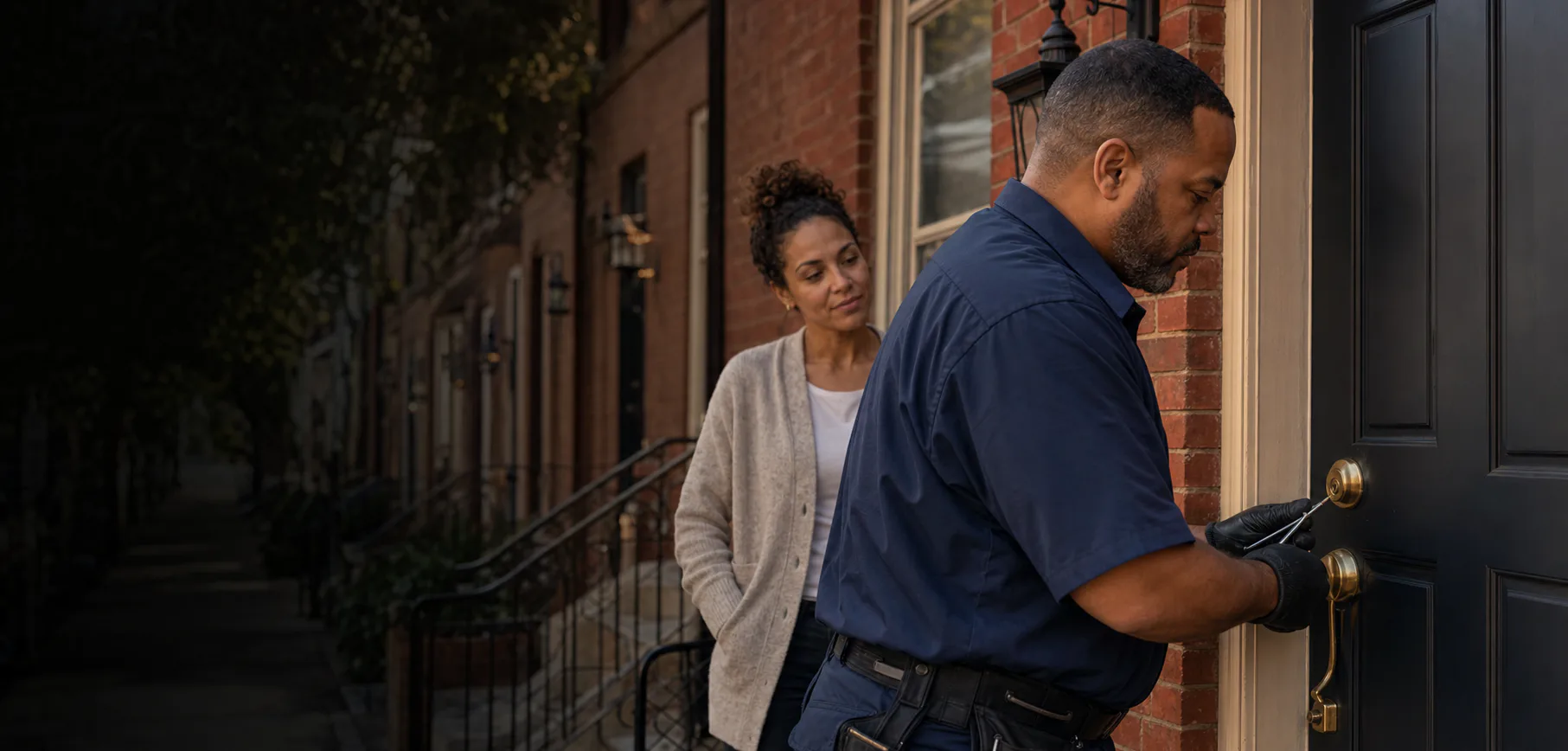
For a rowhome, the lockout is usually straightforward. The locksmith arrives, assesses the door, and works on the lock. Because the entrance is right there, there is no need to navigate a building or wait for someone to grant access to the property. The main challenge is proving you belong there.
Locksmiths are trained to verify that they are opening a door for the rightful resident. In a rowhome, that often means showing photo identification with an address that matches, or providing proof of residence such as a utility bill or lease. If you are locked out of a rowhome and have a neighbor who can vouch for you, that can help, but it is not always enough. The locksmith may still ask for a form of ID that ties you to the address.
Another consideration is the type of lock. Older rowhomes may have rim cylinders or mortise locks, while newer ones often have standard deadbolts. A broken key in the lock, or a door latch that has become misaligned, can complicate what seems like a simple opening. In those cases, the locksmith may need to do more than just pick the lock, and the repair or replacement becomes part of the job.
Apartment building lockouts: layers and coordination
Apartment lockouts add complexity. If you are locked out of your unit but the building entrance is accessible, the locksmith can still reach your door. But if the main entrance is also locked, the locksmith needs a way in. That might mean buzzing your unit from the lobby, if you have a phone or a neighbor who can let you in, or it might require the property manager to provide access.
Many apartment buildings have intercom systems that connect to individual units. If you are locked out of your unit but have a phone, you can call a neighbor or the building office to buzz the locksmith in. Some buildings have a key fob or code entry for residents, but the locksmith will not have those. The property manager is often the one who can provide temporary access or let the locksmith into common areas.
Verification becomes more layered in an apartment. Showing photo identification with the unit number on it is common, but not all IDs include that detail. A lease agreement or a piece of mail addressed to the unit can help. If you are subletting or staying with a friend, you may need the leaseholder to confirm your presence. This is where the concept of home lockout assistance gets more involved, because the locksmith has to confirm not only that you are a resident of the building, but that you are authorized to enter that specific unit.
When each approach suits you best
For a rowhome, the directness of the job means you can often get help faster. The locksmith can focus entirely on the door in front of them. If you have your ID ready and the lock is in good condition, the process is usually quick. This makes rowhome lockouts a good fit for a straightforward emergency call, especially late at night when you just want to get inside.
For an apartment, the situation calls for a bit more patience. If you live in a building with a doorman or 24-hour security, they may be able to let you into the building or even into your unit if they have a master key. If not, you will need to coordinate with the property manager, who may not be on site at night. In that case, calling a locksmith who is familiar with apartment buildings can help, because they know how to work with intercom systems and building access points.
There are also cases where the lockout is not just about the unit door. If you are locked out of the building itself, and you do not have a key fob or code, you might need to wait for another resident to come or go. That is when having a mobile service that can meet you at the main entrance becomes valuable. The locksmith can open the building door if they can verify you are a resident, but they may need to see a lease or a piece of mail with the building address.
Access verification and security considerations
Both rowhomes and apartments require locksmiths to verify your identity, but the process differs. In a rowhome, the verification is often simpler because the address is unique. In an apartment, it is about matching you to a unit, which can be trickier. Some locksmiths may ask for a photo ID and a piece of mail, while others may accept a lease agreement. It is a good idea to keep a copy of your lease or a utility bill in your wallet, or at least have a digital copy on your phone, to speed things up.
There is also the matter of security. A locksmith has to be careful not to open a door for someone who does not belong there. In an apartment building, that means being extra cautious, because the consequences of a mistake could affect multiple residents. That is why some buildings require the property manager to be present or to give verbal authorization before a locksmith can work on a unit door.
For rowhomes, the concern is more about the neighbor. If you are locked out and a neighbor sees the locksmith at your door, they might call the police. It is not unusual for a locksmith to be asked to wait while the police arrive to confirm the situation. This adds time, but it is a necessary step for everyone's safety.
Preparing for the unexpected
No one plans a lockout, but a little preparation can reduce the stress. Have a spare key with a trusted neighbor or friend, especially if you live in a rowhome where the front door is the only way in. For apartment dwellers, consider leaving a spare key with the property manager or in a lockbox, if your building allows it. Keep a copy of your lease or a piece of mail with your unit number in your car or on your phone.
When you call for home lockout assistance, be ready to describe your situation clearly. Tell the dispatcher whether you are in a rowhome or an apartment, whether the building entrance is locked, and what type of lock is on the door. This helps the locksmith bring the right tools and know what to expect.
Choosing the right emergency locksmith service
Not every locksmith is equipped for every situation. Some specialize in residential homes, while others have experience with commercial and multi-unit buildings. For a rowhome, you want someone who can handle a variety of lock types, from standard deadbolts to older mortise locks. For an apartment, you want someone who is comfortable with intercom systems, key fobs, and building security protocols.
Late-night lockouts are common, and a reliable emergency locksmith service should be available 24/7. They should be able to reach you promptly, regardless of whether you are on a quiet rowhome street or in a bustling apartment complex. Look for a service that offers mobile response, meaning they come to you with the tools and parts needed to handle most lockouts on the spot.
It is also wise to ask about their verification process before you need them. A legitimate locksmith will always ask for identification and proof of residence. If someone arrives and does not ask for ID, that is a red flag. The same goes for a locksmith who quotes a price over the phone and then demands more once they are on site. A trustworthy service will be transparent about costs and procedures.
Rowhome or apartment, the solution is the same
In the end, the difference between a rowhome lockout and an apartment lockout comes down to logistics. The rowhome offers a single, direct point of entry. The apartment adds layers of access and verification. But in both cases, the goal is the same: get you back inside safely and without damage to your door or lock.
That is why having a dependable emergency locksmith service in Philadelphia matters. Whether you are locked out of your rowhome on a narrow street or your apartment on a busy avenue, a professional who understands the local building types can make the experience far less stressful. They know the common lock brands, the typical door configurations, and the verification steps that keep everyone secure.
Being locked out is never convenient, but knowing what to expect can make it manageable. For a rowhome, prepare your ID and know your lock type. For an apartment, have your lease or a way to reach the property manager. And in both cases, keep the number of a trusted locksmith handy. A little preparation goes a long way when you are standing outside in the dark, keys on the other side of the door.